Friday, March 14, 2014

Pi Day

     I hope you had a happy Pi Day!

     March 14 (3.14) matches pi and its first two digits. I know it’s an incredibly nerdy thing to say, but I always wanted this to be my birthday. I mean, it’s something pretty much everybody recognizes, yet it’s also highly geeky. What better day for me to be born on?

     I celebrated by having pizza pie for dinner. Guess what I had for dessert? I had cake. Nothing against pie, I like pie. But is it really rational to have pie on pi day?

     Yes. Yes, it is...perhaps a little too rational.

     I imagine this post is full of too many math puns and references already. And here’s one more! I’ve honestly only heard about this form of poetry in the last day or two, but it’s called pilish. Each word is to be a length determined by the digits of pi. I’ve attempted below, but I don’t expect anybody to follow it without dictionary.com and a bit of metaphorical stretching of a meaning or two...

How I want a great biography
to abloom areas all astir,
adversity abegging.

     I’m … I’m not even going to try going further than that with this poem. Too much alliteration, for one thing. I’m just going to leave it at that. Be glad I didn’t share with you my attempt at Vogon poetry...yet.

     Give pilish a try! Post your attempt below.
     [Pi = approx. 3.141592653589793238462643383279502884197169399]

     (For more info on pilish, see here. For more Pi Day info, check this out.)

Friday, March 7, 2014

Book Review: Elantris

     I’m currently reading Elantris, by Brandon Sanderson. It is about a magical people who’ve lost their magic. It’s about how purpose can drive away madness, and passion can drive us to madness. It deals with the politics and religions of a fictional world in a way that allows the suspension of disbelief.

     There are 4 characters who are the primary drivers of action: a dead man with a thousand pains, a clever widow who never met her husband, a priest with ruthless dedication, and an ambitious zealot with madness on his sleeve and method in his mind. Nobody knows the full situation, yet everyone is caught up in it.

     While reading this book, I’ve noticed something that connects much of Sanderson’s writing: hope. Yes, he creates believable politics (I’m ignoring the question of realism, a different beast altogether). He creates complex and interesting magic systems which seem to tie back into emotions, reason, and a basic understanding of science. Finally, he often puts groups of people into situations so desperate that they lose all semblance of hope.

     Then someone finds it. A desperate soul rife with integrity, intelligence, ingenuity, and some measure of combat ability. (Though they may have a loyal bodyguard with great martial skill.) This hero finds the hope and holds it forth for others to see. People follow the hero and become endlessly loyal. It’s what I loved about the way of Kings, what I somehow did not see originally see in the Mistborn trilogy (it’s a bit more subtle there), and it’s what stood out, proud and blunt, in Elantris.

     Elantris is his 1st book, so the moral hero (as I will describe this archetype) is perhaps less nuanced than in later books, but the Sanderson brand of hope and defiant optimism is definitely there. I think it’s a good thing; it reminds me of the line from (and don’t make fun of me for this, please) the Phil Collins song, Hero: “It was one of those great stories that you can’t put down at night; the hero knew what he had to do and he wasn’t afraid to fight.”

     I definitely prefer the Sanderson hero to the muscled one; give me a dedicated hero who inspires with hope and intelligence over an antihero who stumbles in and saves the day with muscles and explosions. Most the time, of course. I do like occasional explosions.

     I also realized something about his magic systems: he always seems to have a source for the magic. Of course, there are a couple of his books I haven’t read. But whether it’s sprites, gods, or something about the land itself, there’s a reason that world has magic we don’t in our world. Based on what I’ve heard from him on Writing Excuses (a weekly podcast he does with other authors), I fully expect that will hold true in the rest of his stories and books. His world building is astounding, and I enjoy trying to predict the mysteries of his magic, as well the plot and character turns the stories will take.

     I appreciate Sanderson’s understanding of people from so many walks of life; he seems to have an understanding of men, women, the rich, the poor, the honorable, and the despicable. It’s possible he gets them wrong, even that he writes caricatures of real people in some cases. But they are believable enough in the stories that I don’t get pulled out.

     I also want to say that the personality of the moral hero matches what I have seen in Sanderson’s personality. I’ve met him briefly at signings and listened both to his podcast and some of his panels. He’s pleasant, enthusiastic, and intelligent. He certainly determined; he wrote a dozen epics before he got published. That practice is why, I believe, he is a master of his craft; he put  years into writing before he was published. That kind of dedication and passion for his craft shows through in his use of language, in his characters, and in his magnificent worlds.

     Now, back to reading. I want to see what happens with Hrathen.

Thursday, February 20, 2014

3.5 Brief Movie Reviews

Just a few brief reviews of some movies I've seen in the last few months.


Hunger Games: Catching Fire

     Effie for the feels, wow. I’m impressed; in the books, Effie was a mostly oblivious character, from what I remember. The emotional moments (from non-main characters) were from Katniss’ hair and makeup people. These normally oblivious people cried about losing Katniss. But in the movie, Effie conveyed all those emotions in a few brief glances placed here and there through the movie, and they punch right to the heart.

     Of course, there are several changes from the book. I accept that fact about movies. In this case, the changes improved the movie, and some of the changes were fairly hard to notice. A few points that stuck in my head didn’t make it into the movie (the flash of the Mockingjay on the watch) but really nothing that ruins anything.

     I’m looking forward to Mockingjay Part 1, which comes out comes out late November. I understand that Hoffman's major scenes for that movie were finished, and the few spots left will have him digitally inserted.


I, Frankenstein

     I didn’t go in expecting anything, really, except Frankenstein fighting monsters. They fairly quickly summarized the events of Mary Shelley’s book, and then immediately dropped us into a story involving gargoyles and demons. Frankenstein hangs out in the arctic for a few minutes of screen time, and eventually finds himself in the city, hunting the creatures that have been hunting him. They don’t waste time hinting at the backstory; they give it to you right up front so that you can just sit back and watch the action.

     Minor spoiler, a question which reveals a plot hole: Okay, so the gargoyles are basically angels that can turn into stone. They are losing the war with the demons. The head of their order can call for back-up; why doesn’t she?


Delivery Man

     A touching and mildly funny movie starring Vince Vaughn. Who knew? And considering the situation the movie is based around, it’s amazing how many dirty jokes they didn’t make. It barely even earns the PG-13 rating. It does explain why he has 533 children and, I think, gives a good reason not to look down on him for it.

     This movie is based on another movie, Starbuck, which is available on Netflix. Starbuck is subtitled, and the Delivery Man is nearly a scene-by-scene recreation. It explores issues of privacy and parental responsibilities, and I think handles them fairly well. Overall, a surprisingly watchable movie, if not one to rush to the theaters for.


The Hobbit: The Desolation of Smaug

     Do I lose all my geek points for not having seen The Desolation of Smaug yet? I hope not (not that it matters...geekdom isn't tracked by points. Except by very specific people.) Anyway, situations in life arise, and…don’t look at me like that. I’m going to see it soon.

     I look forward to hearing Bilbo's barrel-rider riddle; it was one of my favorite parts of the cartoon from so many years ago, and I really enjoyed it in the book, as well.

Friday, February 14, 2014

A New Relationship?

Happy Discount Chocolate Eve! A poem for those just starting a relationship:

Early meeting, less than glance,
Should we even take a chance?
Can our future be that bright,
Are we passing in the night?

All the bridges that we've burned
And harsh lessons that we've learned
Mean light has been growing dim,
And old hope has become thin.

Serious questions we ask,
Of the future and the past;
We might still go different ways,
Alone the rest of our days.

Time was I could not believe
Someone good might come to me
Maybe someday, plan or whim,
I will find a way to him.

I thought I was without light;
No one, it seemed, was quite right.
I thought there could never be
Somebody who could match me.

Although it's too soon to say,
Where it will lead, where it may,
Once faint hope has been renewed;
With new life, I've been imbued.

But whether we last or not,
Love or heartbreak be our lot,
Either way, I'm glad we met,
Even if just on the net.


Plus, there's this valentine card, which I like:
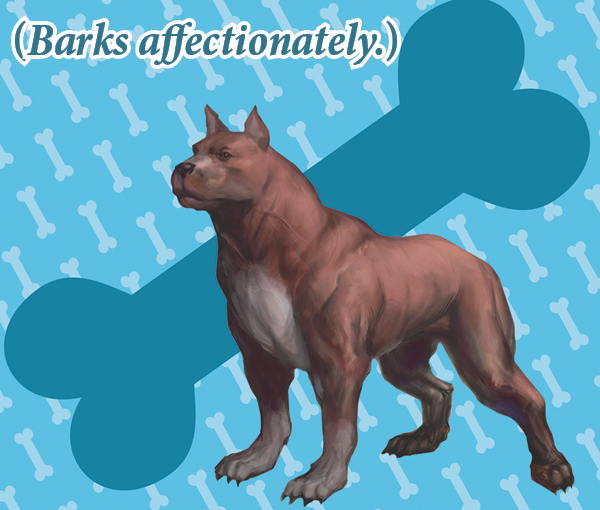
Dragon Age Dog (from blog.bioware.com)


Awooooo

Monday, February 10, 2014

We Value The Difficult

(I am taking a philosophy course. It caused my brain to think. Also, sorry about the more or less two months of inactivity on the blog; family and life have proved to me, once again, that I should really have a backlog of posts.)

     Why are the things that are most critical the most difficult to do? Why is it that the important subjects such as math and philosophy give us headaches? Why is it that unhealthy food can taste so good?

     Is it to give those things value? This does not necessarily imply a consciousness directing these things to be difficult; I can imagine mechanisms of the mind and evolution that would also accomplish this without outside interference.

     Whatever the root cause, I think it is good that we must work for important things. We value the things that give us tribulation; we value the things we work for. It is as parents raising children; they may rate each moment of child rearing as an unhappy moment, (fixing dinner, cleaning up after a mass, trying to get them to bed) but they also (usually) rate children as a great source of happiness.

     I have worked some dreadful hours doing tedious projects to accomplish goals that I doubted were important; I treasure those experiences, not because I'd be willing to do them, but because I pushed myself and learned something of what my limits are, and what my limits are not.

     Things we have to work for, we value. Perhaps this is so that we will work for these things; we desire fat and sugar so much because it was so difficult for ancestors to get - if they didn’t desire it so greatly, they would have died out from the lack of vital nutrients.

     It’s similar for many other things. We have to expend effort to get a return. This is true in the physical world, and perhaps our minds are structured that way fundamentally. Perhaps math is so difficult to so many people because it is so important. Perhaps philosophy gives people so many headaches because it is important.

     This, of course, does not mean that everything that is difficult is important. It would be difficult to create a Death Star, but do we really need one? We don’t even know whether there are other planets sustaining life in the universe, not with 100% certainty. (I suspect that there are at least a few.) We are certainly not at war with any of them, and, I imagine, most people on this planet wouldn’t want to just destroy an entire planet filled with life, anyway.

     But perhaps even when difficult things are not important, they can still be the source of things that are important. Take the book Contact by Carl Sagan. (And to some extent the movie, though I don’t think the movie portrayed this very well.) Constructing the orb spawned entire new industries. Nations were forced to work together. A whole philosophy of peace sprung up around this monumentally difficult task.

     What difficulties have you faced in your life that have shaped you? If you had not experienced them, what would be lost? What would be gained? Should that experience be eradicated from the world?

Tuesday, December 17, 2013

A Crash Course in Worldbuilding: Deities and Portfolios

A Crash Course in Worldbuilding: Deities and Portfolios


    If you take nothing else from this post, remember: whether it's daily life, traumatic events, or the big questions of life, there are things that religious people go to their deities for time and time again. For example, even if no deity specializes in childbirth, expectant parents will still pray for safe childbirth and a healthy child. Keep this in mind when designing a pantheon or a religion for your game or book.


    I researched real-world religions and created a list of portfolios associated with deities. Some portfolios had to be split, for example, “cthonic” generally splits into earth and death. If this were a more scholarly list, I probably would have done things differently. As you build or review your list of deities, consider: do you have someone for people to look to when it comes to these portfolios?


    These portfolios are separated into three groups: The Big Seven, The Notable Seven, and the Seven Tertiaries. They are also listed in the order of how frequently the portfolio is associated with a deity.


THE BIG SEVEN


    The Big Seven (Sky, Childbirth, Fertility, Agriculture, Death, Sun, War) are the seven most common portfolios. They exist in nearly every pantheon. They are often the primary or only portfolio of a major deity.


SKY

Example deities: Nuit, Odin, Thor, Zeus

    Sky also covers air, wind, and storms. These inclusions helped put sky in the top spot. However, since nearly every mythos includes a sky deity, it's appropriate for this one to be high on the list. Sky deities often have a prominent place in the pantheon, and are often a parent deity with earth.


CHILDBIRTH

Example Deities: Bes, Diana, Frigg, Juno, Meskhenet, Terra

    If you think about it, it’s not surprising to see childbirth high on the list. Childbirth is a time when things can go very well or very bad, even in modern times. As linked as it is to happiness, social status, and the survival of the species, childbirth often has several deities in a pantheon watching over different aspects of the process.


FERTILITY

Example Deities: Amun, Brigid, Demeter, Freyr, Isis

    Another category in which a pantheon is likely to have several entrants, fertility can cover many things - a bountiful harvest, many children, or healthy domesticated animals. Fertility is related to survival, reproduction, and success, so is an understandably important portfolio.


AGRICULTURE

Example Deities: Demeter, Jarilo, Osiris

    Often associated with fertility, but also a separate thing, are agricultural deities. They are often associated with cycles of birth, death, and rebirth (Osiris), or more directly as a deity of the season (Demeter). The benefits of a good crop season are obvious, and the difficulties of a bad crop season can be devastating.


DEATH

Example Deities: Hades, Hel, Osiris

    It's no surprise that people turn to gods when it comes to death. Attempts to defeat death have been the subject of great works of literature, from Gilgamesh to Frankenstein. But death has historically been such a terrifying subject that people who overcame it were to be feared (Dracula) or held in awe (Hercules). As death has become less pressing and less terrifying, people who have overcome it...well, let’s just say they’re less terrifying. (*Cough*Angel*Cough*Edward*Cough*) 


SUN

Example Deities: Dazbog, Helios, Sol, Ra

    The sun is a source of both life and death. It simply cannot be ignored. We see and deal with it daily, barring thick clouds, extreme weather, or London fog. Deities of sun can be male or female and are often near the head of the pantheon without being in charge.


WAR

Example Deities: Ares, Athena, Horus, Kali, Set, Thor, Tyr

    Some might have expected war to be high on the list. After all, it deals with death and victory, and most pantheons have multiple war deities (E.g., Ares and Athena). Some pantheons seem to be built around battle (E.g., the Norse Pantheon). However, when you look at the portfolios that score higher, you can see how they would occur more in most people's lives.


THE NOTABLE SEVEN


    The Notable Seven (Earth, Moon, Water, Love, Motherhood, Knowledge, Creation) occur less often and are typically present in association with other portfolios or deities less central to the pantheon. Some of them may occur with major deities in one pantheon while playing lesser roles in others.


EARTH

Example Deities: Aranyani, Gaia, Veles, Zeme

    Earth deities may be the personification of the earth, deities of nature, or deities of death. They often have secondary portfolios such as fertility, wealth, and mountains. These secondary portfolios make sense: people are buried when they die, and many sources of wealth come from the ground: gems, metals, and crops, for example.


MOON

Example Deities: Artemis, Jarilo, Selene

    Deities of the moon often have a close relationship to a deity of the sun. It may be romantic, familial, or adversarial. As with solar deities, lunar deities may be male or female. Deities of the moon are commonly also deities of water, hunting, or magic.


WATER

Example Deities: Enki, Poseidon, Tiamat, Veles

    In some mythologies, one or two deities cover the entire water portfolio. Others separate lakes from rivers or salt water from fresh water. A deity of water may also be one of travel and trade, or of storms and chaos.


LOVE

Example Deities: Aphrodite, Bastet, Cupid. Freyja, Hera, Siebog

    The gods of love are many and varied. This portfolio may cover familial or romantic love; it may be obsession or passion. They may be deities of family and home or someone who cloaks secret love. In a small pantheon, the love portfolio could easily be split and attached to deities with other portfolios, such as moon, fertility, and childbirth.


MOTHERHOOD

Example Deities: Akna, Hathor, Hera, Rhea, Terra

    Great mother deities are often married to the head of their pantheon, even if the head shows himself to be a terrible husband. (I’m looking at you, Zeus.) Some deities are defined primarily as mothers, but many mother deities also have portfolios that include love, fertility, or childbirth.


KNOWLEDGE

Example Deities: Athena, Hermes, Ogma, Quetzalcoatl, Thoth

    Deities of knowledge are often credited with inventing or mastering, writing, astrology, and magic. They may be advisors to greater deities, or work more independently. If the society has a legendary library, the deity of knowledge may be the keeper of said library


CREATION

Example Deities: Athena, Enki, Ra, Ptah, Quetzalcoatl

    The creation portfolio is really two separate portfolios: the creation of the world, and crafts or smithing. That’s important to keep in mind when writing up a pantheon. However, when creating a pantheon for RPGs, it’s reasonable to have them in the same “Creation” portfolio.


THE SEVEN TERTIARIES


   The Seven Tertiaries (Fire, Trade, Magic, Youth, Medicine, Fate, Winter) occur less frequently than the Big and Notable Sevens. Some are rare enough that, if they were not common portfolios for roleplaying games, I might have left them off the list entirely.  


FIRE

Example Deities: Brigid, Hephaestus, Hestia, Perun, Svarog

    A fire deity might be a deity of smithing, of the hearth at home, or of divine fire. A deity with the fire domain might not even emphasize fire; it could be simply an expression of their personality or ability.


TRADE

Example Deities: Hermes, Minerva, Veles

    Deities of trade are not the most powerful of deities nor are they near the head of the pantheon. Indeed, they are more likely to appeal to a specific subset of people: merchants. Unless a Trade deity has other domains, they are likely to be a very minor god or goddess.


MAGIC

Example Deities: Apollo, Hecate, Hermes, Isis, Odin, Thoth

    Deities all have supernatural powers, but some are specifically associated with magic. Sometimes it is because they cast spells, other times because they grant or teach spellcasting. They are often also gods of knowledge or writing. They are often high in their pantheon, such as Isis, Odin, and Thoth. However, they may also be pushed to the edge of the pantheon or minimalized.


YOUTH

Example Deities: Hebe, Iounn (the Norse Goddess, not the D&D god)

    A deity of youth may be associated with beauty, adventure, and innocence. They may also have a relationship with another deity, such as one with the Mother portfolio.


MEDICINE

Example Deities: Apollo, Hermes, Panacea, Sekhmet

    This entry makes me think that, perhaps, I should recount these portfolios; most pantheons have at least one deity of health and/or medicine. There are even a few deities for which health, healing, and medicine are the primary portfolio. Still, it seems medicine was outweighed by the sheer number of other portfolios.


FATE

Example: The Greek Fates, Ishtar

    Deities are more often subject to fate than they are the dispensers of it. However, in a game or book which employs luck or fortune-telling, a deity of fate could play a central role.


WINTER

Example Deities: Skadi, Stribog

    Deities of winter are also associated with cold, snow, and ice. They may be gods of death, or they may be generous deities associated with gift-giving and winter festivals.


***** ***** *****


    There they are, 21 deity portfolios for designing a pantheon for your RPG or fantasy world. How do you feel about this list? Are there other portfolios that should be included?

Tuesday, December 10, 2013

Superhero Necessities

I’ve assembled a brief but more-or-less comprehensive list of superhero necessities. The list isn’t promising for the average citizen. It’s not even easy for most above-average citizens.


Bulletproof Everything

     Face included. When fighting crime, someone will eventually shoot you. This is a reality you need to deal with, if you're going to be fighting crime.

     Remember, bulletproof does not mean pain proof. Those bullets will hurt. You can still get bruises and broken ribs while wearing bulletproof equipment. You are just less likely to die. Also, more armor can equal less mobility.


A Helmet

     Not even a mask will do. Everybody in Metropolis should know who Superman is his second week out. Green Lantern's mask isn’t nearly enough to actually conceal his identity. Even Batman’s mask is lacking: chins can be pretty distinctive. A helmet protects your identity while providing some protection to your head. Also consider something to disguise your voice.

     The downside is that you lack some range of vision, and some movement of the head.

     Of course, the downside to concealing your identity is that other people can imitate you. Someone could go out and start committing horrible crimes, to discredit you to get revenge on you.


Locomotion

     When your arch-villain threatens your girlfriend on one side of the city and your best friend on the other side, how will you get to both of them? If the villain is jumping from rooftop to roof top, how will you follow? You need a way to get around. Enough said.


First Aid Kit

     Honestly, if you are out there fighting crime, you are going to get hurt. Unless you are Superman, Wolverine, or someone with similar levels of invulnerability and/or superhealing, you will get hurt. Possibly seriously.

     In fact, add “Good health plan” to the list. You’re going to need it.


Utility Belt

     Consider basic personal security items, such as mace. A camera would be helpful, something with GPS could be...come to think of it, a smartphone with really good coverage. You may also want a ballpoint pen, a pack of gum, and duct tape (according to MacGyver).

     I’m tempted to include swiss army knife; however, I would recommend not having any sharp or deadly weapons. They look bad if you’re arrested. Plus, you might kill someone.

     Few people can kill someone without it having a major negative effect on their mental and emotional states. Think of Post Traumatic Stress Disorder, or shell shock. You will be much less effective if you are sent over the edge, and death is something you can’t undo.


Knowledge of Criminal Law

     Does the law allow you to do what you’re planning? What does it allow, or require? What if you only report suspicious activity to the police?

     Come to think of it, it would be a good idea to have a crack team of criminal lawyers that you consult before you begin superheroing. (Can superhero be a verb? I’m going to go with yes for now). You may also want to recheck with them on a regular basis on what you have done or are planning to do, to determine if you are still behaving within the bounds of the law.

     Even a good team of attorneys may not be able to keep you from jail time, however.


Absolute Correctness

     You need a lot more than certainty when you are fighting crime. How many shows are there where someone is certain that a given person or enemy is the criminal who committed an act, only to find out they weren’t? How often does incontrovertible evidence point to the wrong killers on television?

     The truth is, in real life as in many shows and movies, things are not always what they seem. There are examples, sometimes tragic, of people being certain they were stopping a fight or apprehending a criminal, but they were wrong.

     You are not infallible. You can be wrong. But this piece of the superhero puzzle is so important that it is just assumed for every superhero in nearly every story. After all, who wants to read a story about Batman beating up the bad guy, only to discover he was wrong? Okay, yes, it could make a very emotional and powerful story. But the vast majority of people want to read about villains getting justice, not about the innocent people getting punished.

     If you are punishing the wrong people, you have moved from superhero to supervillain. Some would go as far to say that if you are punishing people at all without a proper trial, then you are a villain.


So there you have it, my more-or-less complete list of superhero necessities. Have I missed any key ingredients? Maybe a super useful item for the utility belt?